

How routing works
Use Instinct Router for wallet-authorized swaps and market funding, and understand quotes, fees, settlement, recovery, and the developer SDK.
From your wallet to a market
The wallet type, source network, payment asset, and destination market determine which routes are supported.
What the quote tells you
The current quote provides input, expected output, minimum received or protected price, and applicable costs.
Approval and settlement
Approvals, swaps, bridge payments, and account credit are separate steps. Follow the original request through its final status.
Fund a token or stock purchase
In an eligible Buy panel, open Fund from another network. Connect the wallet holding your funds, choose its input asset or paste a token contract or Solana mint, and enter an amount. The receiving wallet, network, and payment asset are fixed to the trading panel. Review the minimum receipt, source fee reserve, and exact wallet action before confirming.
Keep native currency for gas on each network where you must transact. Receiving USDC does not automatically fund ETH for the later Base purchase. The native gas option creates a separate reviewed transfer. A bridge can require an approval and a funding transaction, each with its own wallet confirmation.
After destination settlement is verified, request a fresh token or stock purchase quote. The funding transfer and the market purchase are distinct operations with separate costs. Stock eligibility, disclosure, canonical instrument checks, trade fees, and receipt accounting remain in the stock purchase flow. Funding completion is not a stock fill.
Build a frontend with the SDK
Developers can use @instinct/router-sdk from router/packages/sdk in the Instinct repository. Configure the HTTPS API base URL and publishable app key, and register the exact browser origin with the router operator. The package has not been published to npm; use the workspace package or the generated package archive. Server and provider credentials must remain server-side.
Read the current chain and execution configuration, resolve assets by chain and contract or mint, then request quotes using decimal strings. A quote is a preview. The execution controller obtains wallet ownership proof, prepares and validates the exact review, coordinates wallet prompts, stores original submission hashes, and checks settlement. It never automatically resends an uncertain transaction.
Keep durable recovery storage, preserve wallet/account and destination binding, and stop signing when inputs change. Resume an existing request after a reload or disconnect before starting another one. Display receipt status independently of timing estimates: delivered funds can be visible before the route’s final verification policy is satisfied.
Start with the asset and its network
A router connects the asset you spend to the market you selected. First identify the selected wallet, the payment asset and source network, and the destination market. A ticker such as USDC does not identify a network by itself. Base USDC and USDC on another chain are separate balances.
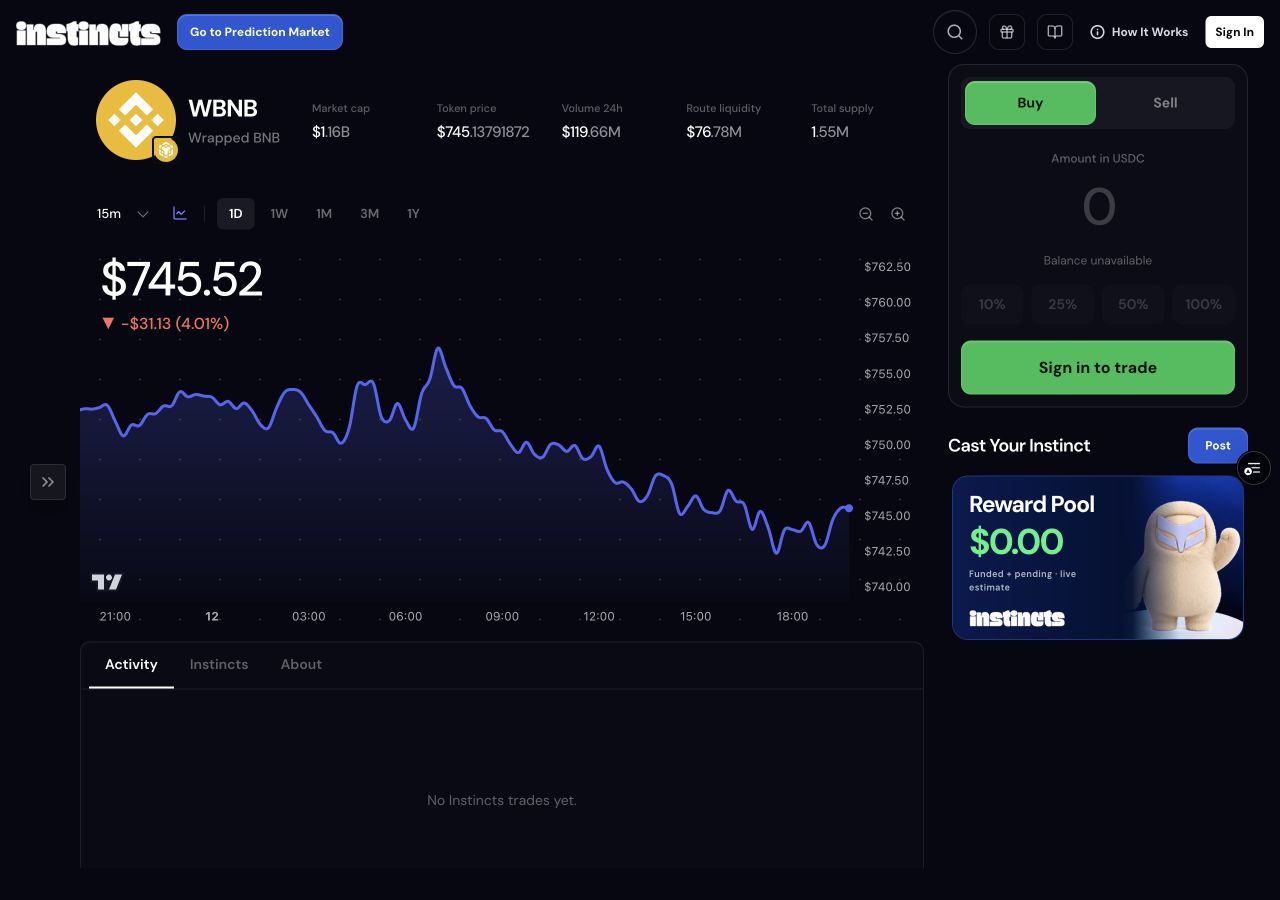
The network badge on a token page identifies that market. Its trading panel identifies the input asset. The app obtains a route supported by your wallet and the current market; a listed asset does not imply that every asset or chain can fund it directly.
Same-network token and stock trades
External-wallet token trades use quoted calls on the token market’s chain. Stock trades execute on Base, using USDC or an ETH payment route when that option is offered. The app requests the required wallet network and checks that the signing account matches the selected trading wallet.
A token approval gives the quoted contract permission to use an asset. The swap then exchanges that asset through the supported liquidity route. If approval is already sufficient, the quoted calls may not need another approval. Gas is the network cost of the transaction, separate from the amount being exchanged.
Managed routes between networks
For an Instincts wallet and an enabled cross-chain token route, Base USDC can fund a trade on another supported network. The route may bridge funding before the swap or use prefunded inventory when available. That choice is made by the supported route, not by a promise that every trade executes instantly.
A managed sell can include a second stage that returns proceeds as Base USDC. The panel tracks collection or funding, swap submission, and any return or recovery. The original request remains active while those steps finish so its funds are not treated as available for another trade.
Perps routing funds a separate account
A Perps wallet top-up routes a supported source asset into pUSD in a Polygon funding wallet. A further collateral authorization credits the Perps trading account. Opening a position then uses that credited margin at the venue; it is different from buying the underlying asset through a spot-token swap.
The bridge quote shows the source payment, estimated receipt, minimum output, and costs. Actual settled funds must meet the Perps deposit minimum before crediting. The order’s 10 pUSD notional minimum is a separate check that depends on position size and leverage.
Read the quote before wallet approval
For spot trades, compare the asset you pay, expected receive amount, and minimum received. For Perps, the quote includes a protected or limit price, notional, required margin, and fee estimates. Network costs, bridge costs, trading fees, and price movement are different components of the final result.
Quotes can expire or change. A changed amount, side, market, account, or leverage requires a fresh check. Signatures authorize the displayed account operation; transaction prompts authorize on-chain calls. A requested network switch lets the wallet use the required chain and is not itself a payment.
Follow the original request to completion
A source transaction receipt confirms that source-chain step. It does not prove a destination bridge receipt, returned sale proceeds, Perps credit, or an order fill. Use the progress shown by the relevant ticket and its transaction links to distinguish those stages.
If a request is pending or its result is unknown, let the app check it or use its status control. Do not repeat a payment to resolve a missing update. When recovery is offered, review the recovery quote and continue the original route. A route that is unavailable should remain blocked until a supported fresh quote is available.